Indie
'It did feel like people were being left out and those people had ovaries and darker skin...' Martin Rossiter on Britpop's problems, Gene's second coming and why the band can count Prime Minister Andy Burnham as a fan
Gene frotman Martin Rossiter gives Contact Music a tell-all interview about Gene's reunion, the sexism and racism that existed in Britpop, his PTSD caused by a teenage assault and why he thinks Diary of a CEO influencer Steven Bartlett is a damaging "d***head".

When Britpop exploded across Britain in the mid-1990s, it felt like a revolution. After years of American grunge dominating the airwaves, a new generation of British bands emerged with guitars in their hands and something to say. Blur, Suede, Oasis and a host of other artists became the soundtrack to a changing cultural landscape, but among those leading the charge was Gene, a band whose emotionally charged songs and heartfelt performances earned them a devoted following that has never disappeared.
At the centre of Gene’s world has always been Martin Rossiter, a frontman whose vulnerable, poetic songwriting and unmistakable voice gave the band their identity. Alongside Steve Mason, Matt James and Kevin Miles, Rossiter created music that captured the uncertainty, romance and heartbreak of a generation, combining timeless melodies with lyrics that felt intensely personal.
Formed in London in 1993, Gene quickly became one of the most respected names of the Britpop era. Their debut album Olympian arrived in 1995, reaching the UK Top 20 and introducing fans to songs including For the Dead, Sleep Well Tonight and the hit title track, while Rossiter emerged as one of the scene’s most compelling frontman - comparisons to Morrissey were deserved - Gene were never simply chasing the next hit; their music was built around connection, emotion and the belief that a great song could stay with someone for years.
Over the following decade, the band released three more acclaimed albums Drawn to the Deep End, Revelations and Libertine, building a loyal audience through unforgettable live shows. But after years of touring and recording, Gene called it a day in 2004, leaving behind a catalogue that continued to mean the world to fans who had grown up with their music.
Then, more than 20 years later, something remarkable happened. In 2025, Gene met in a pub with former Creation Records boss Alan McGee – the man who signed Oasis – and Kevin Fitzgerald to discuss a comeback. The response showed just how powerful that connection had remained. Their comeback concert at London’s Eventim Apollo on October 4 sold out in just 10 minutes, transforming what could have been a nostalgic one-off into a celebration of a band and a fanbase that had never truly let go.
That emotional homecoming was captured with the release of live album Apollo, recorded at the show, preserving a night where old memories were revisited and new ones were created.
Now, Gene are preparing for another major milestone, with two concerts at London’s iconic Roundhouse venue on October 9 and October 10, followed by their first American tour in 24 years.
Ahead of the Roundhouse shows and their long-awaited return to America, Martin Rossiter spoke to Contact Music, bravely revealing he is still living with PTSD from a teenage trauma.
Rossiter also told us why Britpop proves the music business was sexist and racist in the ‘90s, how Oasis epitomised the lad culture of the decade, why Diary of a CEO podcaster Steven Bartlett is a damaging force in the world and reveals that Labour Prime Minister Andy Burnham is a Gene fan…
Contact Music: Gene are back and about to play The Roundhouse, what an exciting time for the band...
Martin Rossiter: I'll be honest with you. I don't get too excited. I don't say that to be deliberately obtuse or downplay anything we're doing. I embrace everybody else's excitement, but I find that excitement leads to hernias, and I don't particularly want a hernia! So I try to remain quite level headed about such things. What it is, for me, is a word I struggled to spell many years ago, fun. It's fun.
I guess it's fun because the band is older and you probably appreciate it more. And I guess it's fun because the fans are turning out in their droves…
I can't deny that having fans coming to our shows is quite important!
It's astonishing when we got back together a year and a half ago and we sat in a bar, the four of us with, Alan McGee and Kevin Fitzgerald, his partner in crime, and we were discussing what would be a good place to do our first comeback show and the Hammersmith Apollo was suggested. I swung like a pendulum on crack for one day thinking, ‘What are we doing? Who will care about us 25, 30 years later?’ To the next day thinking, ‘Yeah, we're the greatest band on earth.’ Then the next day being full of self-loathing. I remember when the tickets went on sale, it was an astonishing 10 minutes to discover that we'd sold the show out. I think it's a testament to the songs. I listen back to our old records and they are deeply flawed, but also at times quite wonderful. But to know that those songs are still making people dance around their kitchens or cry into their pillows on a lonely Friday night is a testament to those songs.
You put it very eloquently, but it's the sort of thing that as a musician or songwriter if your songs can do that still after all this time, then that’s the hallmark that they were worth something at the time…
Yeah, absolutely. I mean when I wrote Olympian, I was still living at home with my mum. It was just me and my mum just outside Watford. I could only afford to move out of home - I got a little flat in Tooting in South London - on the day we signed our record contract with Polydor. So a lot of those songs were written on my childhood bedroom floor with cassette tapes and a little notebook and the fact that they're still being sung now and have weaved their way into the hearts of thousands - I’m not going to say millions - is remarkable. I was just a little boy writing those songs and now they seem to still be loved. I find it astonishing.
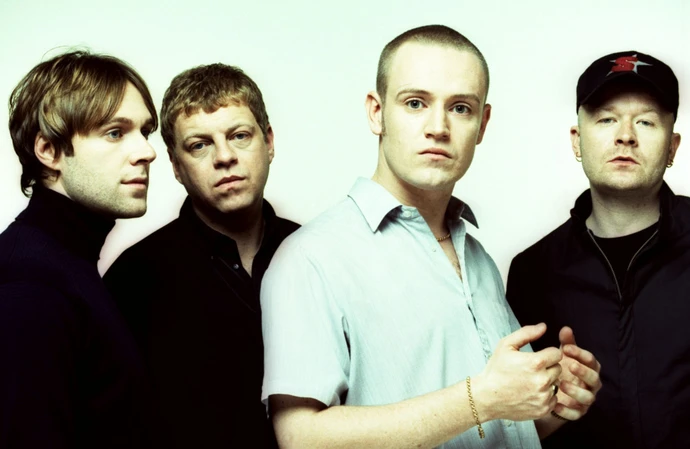
Gene in the '90s / Credit: Pat Pope
The ‘90s music scene is obviously having a huge renaissance in the past couple of years and ultimately that is down to the quality of the bands like Gene who made some brilliant albums…
I think so. Although having said that, I'm going to sow a seed of caution. Looking back at that time I did an interview for Kevin Cummings, the NME photographer, who released a book two or three or four years ago of photographs at the time. The book contains Gene and Brett Anderson and Damon Albarn and Sonia Madan from Echobelly and various people. I did this interview, and while I was doing it I went back and I looked at all the front covers of the NME from 1995, so 52 front covers. I might have my numbers slightly wrong, but there were only something like three women and one or two people of colour on the front covers of those magazines. That, to me, suggests actually a deeply misogynistic and racist music industry. I think anybody from that time, myself included, we have to understand that we come from a place and a degree of privilege of being white men. The music industry has a habit of doing that, certainly in this country, it’s one of the few things America is better than us at. I just think it would have been a much richer era musically if it included people other than white men.
I read NME religiously and I remember at the time you were quite keen to distance yourself from the Britpop label at the time, weren’t you?
Yeah, absolutely. I mean, I’m 56 now and I've had I've got three children and so there are other things that matter to me more now. So I'm sort of very phlegmatic about it now. But yeah, certainly at the time, I’m just deeply sort of anti-nationalist. I’m an old school lefty, what people now call woke. I’m woke and proud! I think it was an era that produced some amazing records, don't get me wrong. I remember when Blur released Beetlebum and thinking, ‘Oh, this is fantastic.’ It was quite dark and moody and a very unusual record and it got to number one. And you had The Prodigy and Breathe and Firestarter were number one records. I'm not dismissing the era in in totality, I just think there were a lot of people left out and I think at the time, maybe I didn't have the political nous to express it as well as I can now. And that’s just by being able to look back at the time. It did feel like people were being left out and those people had ovaries and darker skin.
There were a group of female-fronted bands like Sleeper and Echobelly and Kenickie and Elastica and those singers have come out since and said that they felt they were victims of sexism at the time and overlooked and sort of put into the corner. That was their lived experience…
I absolutely think they're right. I remember talking to Justine Frischmann from Elastica about how she was asked to do a photo shoot mimicking that Christine Keeler naked shot on the chair from the ‘60s. Nobody ever asked me to take my top off.
Double standards?
Absolutely. I think it's fair to look back on that time with a degree of fondness. I don't have a problem with people doing that, but I just think it could have been a more musically richer time if the word Brit in Britpop included everybody.
I don't know if you've seen the Oasis documentary that's been made by Steven Knight. But there's a clip going around where Noel Gallagher makes a point of disassociating the band from right wing sentiments. The point being that the reunion gigs proved that the band was always for everyone because there were young people, older people, women in the crowds. Because as Oasis became a cultural monolith those crowds at the gigs were full of lads and like a football crowd...
I think Gene have a really interesting perspective on this because For the Dead, our first single, came out a week either side of the first Oasis single so for about 19 minutes we were the bigger band.
This is not me dismissing Oasis as people, but they landed at a time where Loaded magazine had just started and that culture of ‘get your t**s out for the lads’ and football terrace culture.
You only have to look back of episodes of The Word it's deeply embarrassing.
As you said you were there when Oasis broke and the explosion of Britpop, did you hang out with Liam and Noel?
I've met Noel Gallagher many times and I got on very well with Bonehead, weirdly.
I don’t have a particular Oasis anecdote. I do have loads of wonderful stories from that time, you know, for instance almost getting beaten up by Grace Jones and watching Graham Coxon, who I'm very fond of as a human being, panicking and trying to open the door of a plane mid-flight.
Do you care to elaborate on how Grace Jones almost beat you up?
No! I'll save that for another day.
Times have changed now, even hellraisers like Liam Gallagher are going teetotal. He didn't drink once on the Oasis reunion tour…
Lightweight!
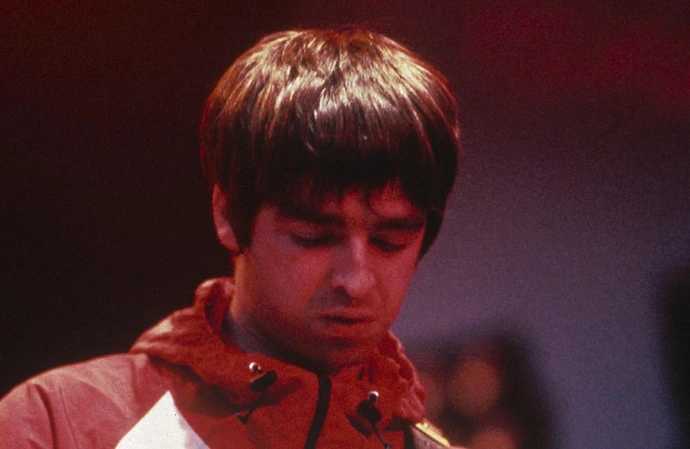
Noel Gallagher on stage at Maine Road in 1996 / Credit: AVALON
You mentioned that Alan McGee, who discovered Oasis, is involved with the Gene reunion. He's been quite instrumental working with a lot of bands from that era at present…
Alan is like a ‘90s musician Dyson vacuum! Hoovering up everybody and anybody. No, I'm doing him a deep disservice by saying that. I met Alan in the ‘90s, I didn't know him at all. What I've discovered is that he's actually a deeply kind man. He's fundamentally good and thoughtful and caring, and he'll hate me for saying that because, he hides behind this sort of Glaswegian brogue, but he's so gentle and I'm very, very fond of him. And this is public information I have post-traumatic stress disorder and he checks in on me a lot. I'm very fond of him.
You're not the first person to say that. He is universally loved and respected in the music business in this country by everyone he works with…
Well, he’s genuinely a gentle and loving human being. I don't have a bad word to say about him apart from his tracksuits! I'm a man who likes a tracksuit, don't get me wrong, but I just want to say, Alan, there are other clothes!
He's at a point in his life where comfort is clearly important…
Obviously, that's very true. I can imagine an old people's home in about 20 years’ time where we're all in there, Zimmer frames to the hilt! Like the TV show Stella Street but all indie bands. It’ll be Stella Home. You will have Liam Gallagher walking around desperately clinging on to his haircut. I think somebody should make this into a TV show before it actually happens in real life.
You mentioned your post-traumatic stress disorder (PTSD). How does that affect you performing?
Without sounding like a desperate cliché. I feel very comfortable on stage.
Can you elaborate on your PTSD?
Well, when I was younger my Dad was quite an abusive man and there was also an incident where I was groomed and raped when I was 14 and that that is very hard to shift unless you have a lot of money.
On stage, waggling my fat Welsh arse is one of the places where I feel most at home. Although I might just add not so fat anymore because I've lost three stone this year. I've become obsessed with walking. I do 15,000 steps a day.
That is commendable that you've not resorted to the fat jabs to lose your weight, like everybody else has…
The thing is those jabs they suppress your appetite. But it was it was never food that made me fat it was beer. And nobody's getting in the way of my beer. So I've become obsessed with walking. So will see me every day down at the seafront in Brighton striding away like a colossus.
That trauma you experienced as a teenager, do you still have therapy to cope with what happened?
The problem with things like therapy is that they are the privilege of the wealthy. I don't have enough money, I can't afford £60 a week. There is a wonderful book that anybody who has trauma should read which is called The Body Keeps The Score, written by a man called Bessel van der Kolk, who is one of the early researchers into this. He worked with a lot of Vietnam War veterans. He basically wrote the Bible on PTSD and his discovery was that it is actually stored in the central nervous system. There's a therapy which sounds terribly sort of hippy dippy called eye movement desensitisation and reprocessing which, and I'm going to explain this very badly, is a genuine therapy where you can essentially move the trauma from one part of your central nervous system to another. But it's the preserve of the wealthy. And I'm not wealthy. I can't afford it. So one struggles on. My therapy is Heineken. I use the Heineken method.
You are heading to America for a tour. Could you envisage that Gene would be playing America and there would be a clamour for that in 2026?
Would I have imagined this three years ago? Absolutely not! But Los Angeles will have the pleasure of my delicate footsteps.
We always did quite well in America, actually. I think there's a cohort of people who crave music that's emotional and, without sounding like too much of a ponce, sincere and heartfelt. There’s a few of those people left, so come one, come all to the shows.
Is it hard to tour the States now?
Let’s just say it’s not really going to change the bank balance. Do you know do you know how much the visas are? About three and a half thousand pounds each. I would love to go everywhere and play shows but we have to be sensible andat least consider places where we won't lose money. We might come back from the States with a couple of grand each, but it's not the huge money earner that people perceive these things to be. There are a lot of costs in putting on a show and especially touring.
As the Gene renaissance continues surely a Glastonbury slot next year?
I doubt they'll want a bunch of no marks like us! I mean, we only ever played Glastonbury once, we were more of a Reading band. But there will be some festivals next year.
You headlined Reading in 1995, right?
Yeah, we headlined the second stage which I remember very fondly. People sometimes send me the digital posters back from those days excitedly telling me ‘look you're at the same level as the Foo Fighters.’ Which looking back now I do find quite astonishing. But yeah, we did and it was rammed. I remember it was just after the Country House versus Roll With It debacle, well, marketing ploy.
I remember saying something pithy on stage, I can't remember what it was, but I was mocking them both to a degree. I find it fascinating that for both bands it's neither of their best output and yet these were the songs that went to battle with each other. It’s a bit like Liverpool versus Man United, but Liverpool choosing John Arne Riise as their main player versus Luke Shaw, those being the finest proponents of the two clubs.
Looking back at the ‘90s, and the nostalgia for that decade, obviously Top of the Pops was a big thing. A lot of people still miss it. What did it mean to you when you got on the show? And what was it actually like backstage on Top of the Pops?
When we did it I think Babylon Zoo were number one with Spaceman from the Levi's advert. The guy from Babylon Zoo, who, bless him, was absolutely charming and very, very nervous. I remember sort of thinking, ‘Who am I to give him a pep talk?’ But I remember chatting with him.
It was a strange era for Top of the Pops because they went through various iterations with regard to the sound. So you have an era where everybody had to play live or there was an era where everybody mimes. And we were in this bizarre era where the band mimed but it was a lead vocal, so the vocal was live. I do remember thinking they cared more about camera angles than sound, which is strange for a music show. We only did it once. I don't think Top of the Pops particularly liked us. We had 10 top 40 hit singles and yet we only appeared on the show once when we were high enough to force their hand into having us on. Which is fair enough.
I remember, like everybody, avidly watching it every week and sort of feeling jealous of a band that went in at number 25 who were on the show and thinking, ‘Well we went in at number 22 why aren't we on there?’ So feeling hard done by, which is ironic for somebody who has the luxury of singing for a living.
I think it was more important in the ‘70s and ‘80s. I can remember the first time watching Top of the Pops with my big sister when I must have been seven and seeing the sort of rundown of the top 40 and I didn't really quite understand what it was but seeing the name The Sex Pistols and they weren't even on the show but just seeing the name, The Sex Pistols and being sort of drawn to what felt like a very illicit world back then. I knew that was a key moment in my life, just seeing the name The Sex Pistols in the chart rundown and knowing this is the world for me. Even at the age of seven or eight.
I think a lot of people and musicians had that experience. You're seeing this other world in front of your eyes that seems very different to your everyday life…
For the generation above me it was obviously David Bowie doing Starman, wasn't it? The musicians in their 60s always talk about Bowie and that Starman performance and, you know, I've watched it and it's remarkable. The remarkable comfort and ease around him and Mick Ronson.
I started watching Top of the Pops avidly when I was 10 or 11 when it was the early years of Margaret Thatcher as Prime Minister. What I mean, and obviously I didn't rationalise like this at the time, but looking back what I find fascinating is that became a fork in the road for British music. There are two videos that I think sum up that time, one is Duran Duran's Rio where they're all on a yacht and the other one is Ghost Town by The Specials where they're driving through rundown communities. Those two records, for me, sum up the early 1980s and sum up the divide between the yuppie versus the everyday man or woman.
In many ways Duran Duran’s Rio encapsulate everything about Thatcher's Britain in that video…
Yeah, and The Specials video captures the other side of Thatcher's Britain. If I could be arsed I'd write a book about the two, but I'm too busy loafing around on the sofa to do such things.
Of course, now our Prime Minister Andy Burnham is a fan of The Smiths…
And he’s a fan of Gene! He came to see us. He's friends with my sister. My big sister worked in politics for years and Andy and his wife came to see us in 2000-and something. I don't think I met him, actually, not that I can recall.
He seems like a genuine fella. But I'm more interested in the policies. I’m as left as they come. You take the wins you can get in politics, and what I'm hoping is that he's true to his word about decentralisation. I would love a Labour Party that brought back Clause IV for workers, but I'm fully well aware that's not going to happen.
Weirdly, as we're talking, I've had the TV on in the background and muted and I haven't even noticed what's on. But I've noticed that Homes Under the Hammer is on, which is literally terrible, horrible capitalist propaganda for the landlord class. It’s one of the reasons that there aren't enough houses for people. This programme promotes the idea of people buying properties, doing them up and profiting off the poor. It sickens me.
I've got three daughters. My eldest daughter is 28 now and she and her boyfriend they're thinking about getting on the ladder,as it's known, and it's really, really tough. It's so hard for young people now. Anybody who suggests that people should drink fewer lattes and eat less avocado should be marched to the gallows as far as I'm concerned. It’s f***ing gibberish. It p***es me off!

British Prime Minister Andy Burnham is a fan of Gene / Credit: AVALON
It’s a nonsense and unfortunately we also live in an age now where there are a lot of self-help gurus on social media giving advice which is basically blame yourself for all your shortcomings, which isn't right…
There’s a fantastic YouTube channel called Barry's Economics and he's far cleverer than I and is able to communicate the systemic problems in society using research. One of the reasons I turned off Labour in 1997 is that I loathe even the concept of meritocracy. If we are the planet Earth then meritocracy is about 17 million light years away. It's some distant dim star.
And the other thing that winds me up - sorry I'm on a rant here - the other thing that winds me up is we only ever interview the successful and hear the narrative of, ‘well, if I can do it, so can you.’ It's gibberish. Because what about all the other people who try really hard and work just as hard as that Diary of a CEO d**khead [Steven Bartlett].
I’m talking about f***ing nurses, teachers, toilet cleaners. Oh, well, if I can do it, so can you. No! Society requires these people. We need these people. What a terrible world it would be if nobody cleaned the loos. And to suggest that these people didn't try hard enough is frankly insulting. We can’t all be entrepreneurs and set up businesses because nothing would happen. We need people to bathe the wounds of the injured. We need people to nurture our children. We need people to clean our bogs!
I think as a campaign statement that would work well...
Yes!
Gene play the Roundhouse in Camden on Friday 9th and Saturday 10th October, with support from The Slow Readers Club and Rialto. For tickets click HERE